

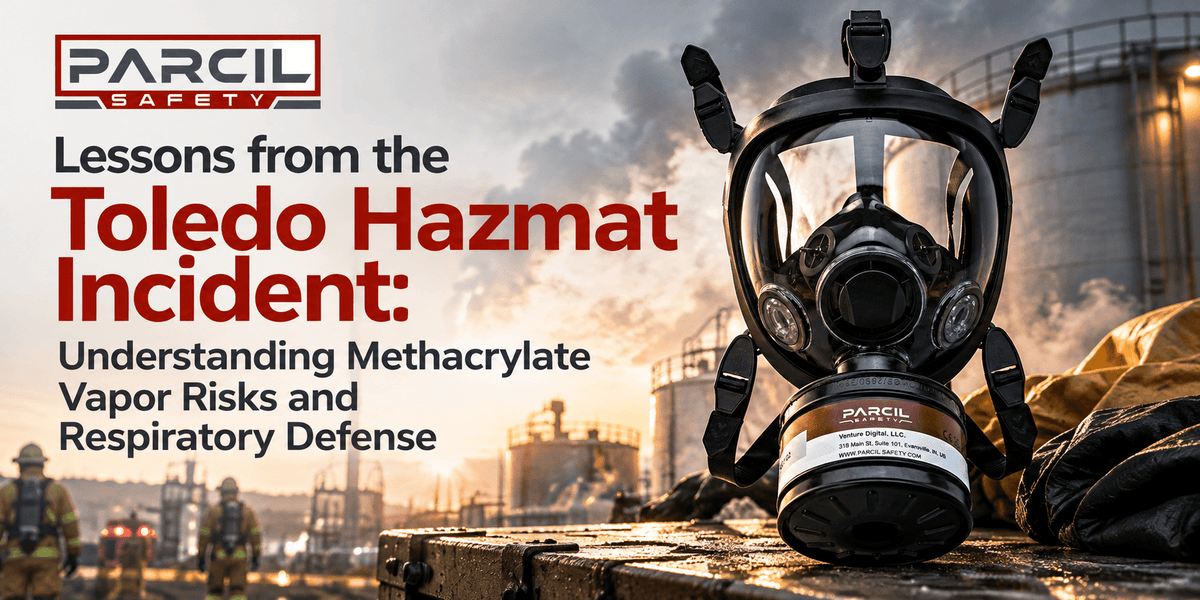
When emergency evacuations and shelter-in-place orders were issued following a chemical tank release in North Toledo, Ohio, thousands of residents and local facility workers were reminded of how rapidly industrial chemical emergencies can escalate.
The incident—involving a leak and thermal reaction of glycidyl methacrylate at a chemical transport depot—resulted in a white vapor plume that led to localized evacuations, temporary facility shutdowns, and hospital visits for respiratory and eye irritation. While first responders successfully managed the site and prevented further thermal runaway, the event serves as a crucial case study for industrial safety directors, hazmat teams, and workers exposed to organic vapor hazard zones.
What Is Glycidyl Methacrylate, and Why Is It Hazardous?
Glycidyl methacrylate (GMA) is a bifunctional monomer widely used in chemical manufacturing to produce specialized acrylic resins, industrial coatings, adhesives, and polymer additives. Because it contains both methacrylate and epoxy functional groups, it is highly reactive and susceptible to exothermic polymerization (a self-heating chemical reaction) if mishandled, contaminated, or exposed to excessive heat during transfer.
From a respiratory and occupational health perspective, glycidyl methacrylate presents several distinct hazards:
- Severe Inhalation and Mucous Membrane Irritant: As a volatile liquid, GMA turns into a dense gas or vapor cloud upon release. Inhaling vapors rapidly irritates the eyes, nose, throat, and respiratory tract, causing symptoms like coughing, burning sensations, shortness of breath, and headache.
- Skin & Eye Sensitizer: Direct vapor or liquid contact can cause severe skin sensitization, chemical burns, and severe eye damage.
- Thermal Instability & Vapor Pressure: When a bulk container loses thermal control, the resulting pressure buildup vents toxic and flammable organic vapors into the surrounding environment, creating immediate vapor plume hazards downwind.
Key Safety Takeaways for Industrial Facilities and First Responders
Events involving volatile monomers highlight the importance of proactive respiratory protection protocols, proper hazard communication, and rapid response gear.
       [ Monomer Storage / Transfer Hazard ]
                        │
                        ▼
   [ Thermal Instability / Exothermic Leak ]
                        │
                        ▼
     [ Volatile Organic Vapor / Plume Release ]
                        │
      ┌─────────────────┴─────────────────┐
      ▼                                   ▼
[ Primary Hazmat Defense ]     [ Facility Worker Protocol ]
 • Full-Face Respirator (OV/AG)  • Continuous Plume Monitoring
 • Multi-Gas Digital Meters      • Evacuation / Shelter-in-Place
 • Chemical-Resistant Suits      • Immediate Decontamination
1. Match the Filter to the Hazard Class
Not all respiratory protection is created equal. Volatile monomers like glycidyl methacrylate require dedicated Organic Vapor (OV) cartridges certified under NIOSH or equivalent international standards. Standard particulate N95 dust masks offer zero protection against organic chemical vapors or monomer fumes.
For high-concentration chemical plumes or emergency containment work, workers and responders require Full-Face Respirators equipped with multi-gas/organic vapor cartridges and integrated impact-resistant face shields to protect the ocular system from severe lacrimating irritants.
2. Recognize Early Warning Signs of Chemical Exposure
During an airborne release, chemical odors can travel miles past the immediate evacuation perimeter. Environmental health monitoring indicates that exposure symptoms for methacrylate vapor clouds typically progress in distinct stages:
- Initial Exposure: Strong paint-like chemical odor, eye lacrimation (tearing), nose and throat stinging.
- Moderate Inhalation: Dizziness, headache, nausea, and persistent coughing.
- High Concentration / Prolonged Inhalation: Severe airway inflammation, chemical pulmonary edema, and systemic toxic effects.
Any worker or nearby resident experiencing respiratory discomfort should immediately move crosswind/upwind from the plume source, remove contaminated clothing, and perform immediate skin and eye irrigation.
Equipping Your Team: Recommended Parcil Safety Respirators
Chemical spills and monomer releases happen with very little warning. Having certified, heavy-duty respiratory protection readily accessible is essential to worker survival and long-term health. Parcil Safety engineers industrial-grade full-face respirators and defense canisters specifically designed for volatile organic fumes, industrial chemical leaks, and emergency hazmat response.
1. ST-100X Full Face Respirator Gas Mask
The ST-100X Gas Mask Respirator is our flagship full-face system for industrial facility managers, plant operators, and safety directors working around volatile organic solvents, resins, and monomer transfer lines.
- Panoramic Ocular Protection: Features a 200° wide-angle, impact-resistant face shield to protect eyes from lacrimating vapors like glycidyl methacrylate.
- Organic Vapor & Particulate Defense: Included filter options eliminate volatile organic compounds (VOCs) and monomer fumes before reaching the airway.
- Comfort & Fit: 5-point head harness with a soft silicone face seal ensures a gas-tight seal for long shifts during containment operations.
2. NB-100 Tactical Gas Mask with 40mm Defense Filter
Engineered for rapid deployment during chemical spills and industrial hazmat releases, the NB-100 Tactical Gas Mask combines military-grade ergonomics with standard industrial air purification.
- 40mm NATO Compatibility: Uses standard 40mm threaded canisters, allowing quick swapping of filter cartridges based on air monitoring readouts.
- Integrated Voice Diaphragm: Enables clear verbal communication among emergency response crews in high-noise or high-stress hazardous environments.
- Low-Profile Shield: Lightweight, scratch-resistant visor engineered for low distortion during movement and tactical hazmat containment.
3. CS-100 Riot Control Gas Mask with N-B-1 Defense Canister
When airborne hazards involve complex chemical mixtures, tear gas, or severe chemical irritants, the CS-100 Gas Mask paired with the N-B-1 Defense Canister provides high-level defense.
- Broad Spectrum N-B-1 Canister: Designed to filter organic vapors, acid gases, chemical particulates, and severe lacrimating irritants.
- Heavy-Duty Face Shield: Built to withstand harsh outdoor chemical plumes, high humidity, and physical impact.
- Ideal for First Responders: Built specifically for emergency personnel, perimeter security, and hazmat units entering high-risk vapor containment zones.
Proactive Safety Checklist for Industrial Hazmat Readiness
To ensure your workforce remains protected against sudden monomer releases or airborne chemical plumes, verify your facility's readiness against this three-step protocol:
- Verify Filter Compatibility: Confirm that all emergency caches are stocked with Organic Vapor (OV) certified canisters rather than basic dust or particulate filters.
- Conduct Regular Fit Testing: Ensure every worker assigned to hazardous areas has completed quantitative fit testing for full-face masks to guarantee a gas-tight seal.
- Position Rapid-Access Caches: Store full-face masks like the ST-100X or NB-100 near chemical transfer bays, loading docks, and emergency exit routes.
Leave a comment
All comments are moderated before being published.
This site is protected by hCaptcha and the hCaptcha Privacy Policy and Terms of Service apply.