

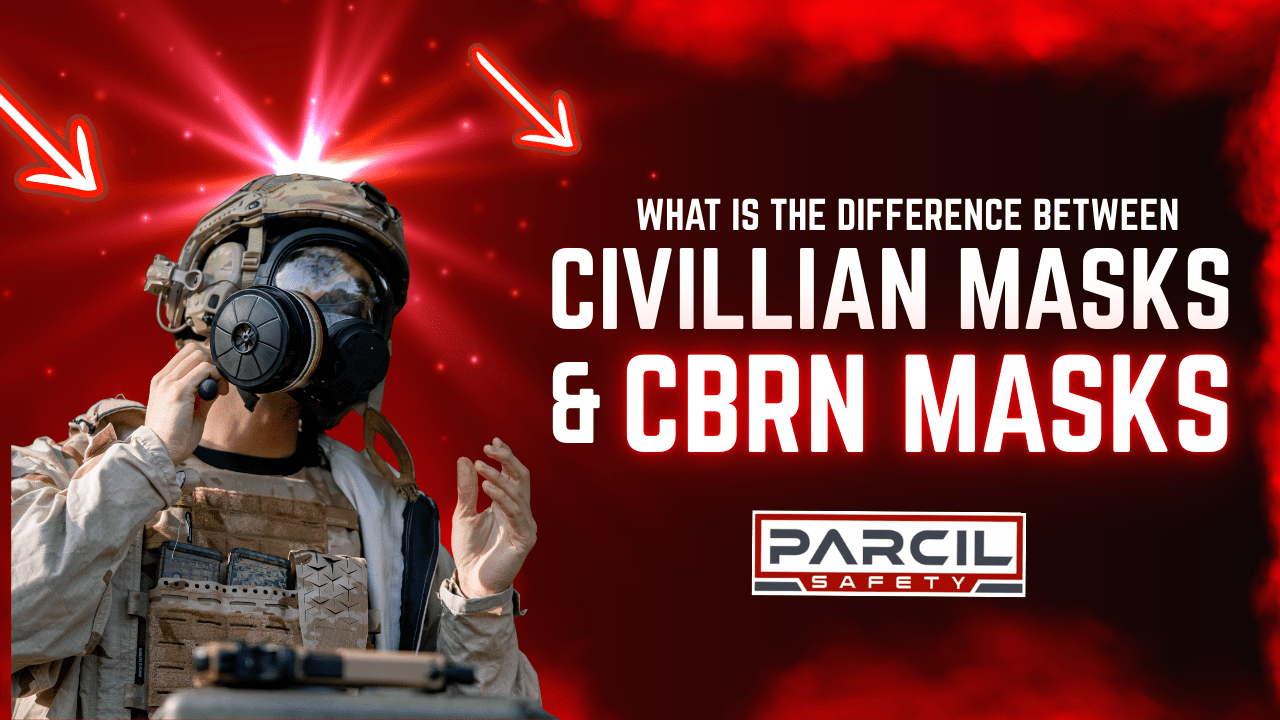
If you search online for a gas mask today, you will quickly run into one term: CBRN.
Chemical. Biological. Radiological. Nuclear.
It sounds comprehensive. It sounds extreme. And it often sounds like the gold standard.
But here is the question most civilians should be asking:
Do you actually need a CBRN gas mask?
Understanding the difference between true CBRN-rated equipment and high-quality civilian tactical respirators is essential. Choosing correctly can save you money, ensure realistic preparedness, and prevent both under-protection and over-investment.
Let’s break this down clearly and responsibly.
What Does CBRN Actually Mean?
CBRN refers to environments involving:
- Chemical warfare agents
- Biological threats
- Radiological contamination
- Nuclear exposure
True CBRN equipment is typically developed for:
- Military forces
- Hazardous materials teams
- Specialized emergency response units
According to the National Institute for Occupational Safety and Health (NIOSH), respirators intended for CBRN protection must undergo rigorous certification processes under specific testing protocols for chemical warfare agents and toxic industrial chemicals.
NIOSH maintains a dedicated CBRN approval category, which includes additional performance criteria beyond standard industrial respirators.
These masks are engineered for:
- High toxicity exposure
- Severe contamination scenarios
- Extended operational use in extreme environments
They often include:
- Butyl rubber construction for chemical resistance
- Specialized voice communication systems
- High-end CBRN-rated filters
This is mission-specific equipment.
Get Respiratory Protection Here
What Is a Civilian Gas Mask?
Civilian full-face respirators are designed for moderate-risk and real-world emergency conditions.
They protect against:
- Smoke inhalation
- Airborne particulates
- Tear gas
- Industrial vapors
- Low-level chemical exposure
- Environmental hazards
According to OSHA (Occupational Safety and Health Administration), most occupational environments requiring respiratory protection fall under industrial particulate and vapor classifications rather than military-grade CBRN deployment conditions.
For preparedness-minded civilians, this distinction matters.
Masks like the NB-100 Tactical Gas Mask, CS-100 Full-Face Respirator, and ST-100X Survival Gas Mask are built to handle demanding, high-intensity environments while remaining practical and accessible.
These respirators offer:
- 40mm NATO compatibility (STANAG 4155 / EN148-1)
- A2B2E2K2P3-rated canister compatibility
- Durable silicone or rubber face seals
- Wide panoramic field of vision
- Secure multi-point harness systems
They are engineered for realistic threats.
Materials: Butyl Rubber vs Silicone vs Natural Rubber
One key difference between military CBRN masks and civilian models is the face seal material.
Butyl Rubber (CBRN Context)
Butyl rubber offers high resistance to permeation by chemical warfare agents. It is common in military-grade masks because of its resistance to certain liquid agents.
However, it is often:
- Less comfortable
- More rigid
- More expensive
Silicone and Natural Rubber (Civilian Tactical)
Modern civilian respirators like the NB-100 and CS-100 use high-grade silicone, which offers:
- Excellent flexibility
- Strong chemical resistance
- Comfort for extended wear
- Reliable sealing performance
For most civilian emergency scenarios, silicone provides a strong balance of durability and wearability.
Comfort matters in real-world use.
Get Respiratory Protection Here
Filtration: The Real Core of Protection
The mask itself forms the seal. The filter determines protection.
Many civilian tactical respirators use A2B2E2K2P3-rated canisters.
According to European filtration standards (EN 14387), this rating includes protection against:
- Organic vapors (A)
- Inorganic gases (B)
- Acid gases (E)
- Ammonia (K)
- Particulates (P3 high-efficiency filtration)
This level of protection covers many realistic scenarios:
- Smoke
- Tear gas
- Industrial vapors
- Ammonia exposure
- Common chemical irritants
For most civilians, this provides meaningful protection against real threats without requiring full battlefield CBRN deployment certification.
Realistic Threat Assessment for Civilians
According to FEMA, the most common emergencies affecting American households include:
- Natural disasters
- Wildfires
- Industrial accidents
- Infrastructure failures
- Civil disturbances
The Environmental Protection Agency (EPA) reports that wildfire smoke alone has become one of the most widespread air quality hazards across the United States.
The CDC has documented respiratory effects from tear gas exposure in crowd control situations.
These are realistic events.
Most civilians are not operating in nerve-agent deployment zones.
Preparedness means preparing for probable threats, not theoretical extremes.
Get Respiratory Protection Here
Where the NB-100, CS-100, and ST-100X Fit

NB-100 Tactical Gas Mask
Designed for moderate-risk, high-intensity conditions:
- Dual 40mm NATO ports
- 88 percent field of view
- 6-point adjustable harness
- Silicone construction
- A2B2E2K2P3-rated canister compatibility
Ideal for:
- Civil unrest
- Smoke exposure
- Emergency preparedness
- Tactical training environments
CS-100 Full-Face Respirator
Built for demanding volatile conditions:
- Lightweight silicone seal
- Wide polycarbonate lens
- NATO threading compatibility
- Secure fit system
Designed for professionals operating in unpredictable environments.
ST-100X Survival Gas Mask
Compact and accessible:
- Single 40mm NATO center port
- 78 percent panoramic field of view
- Durable rubber face seal
- Anti-fog performance
Often chosen as:
- Entry-level full-face preparedness mask
- Backup respirator
- Go-bag essential
Where the IIR-100 Fits: Built for CBRN-Level Threat Environments

While most civilian preparedness scenarios call for high-quality tactical respirators, there are environments that demand a higher chemical resistance profile.
That is where the IIR-100 Recon Gas Mask comes in.
The IIR-100 is constructed from butyl rubber, a material specifically known for its superior resistance to chemical permeation. Butyl rubber is widely used in military and hazmat applications because it provides enhanced protection against chemical agents and liquid contaminants.
Unlike standard silicone or natural rubber respirators, butyl rubber offers:
- Increased resistance to chemical warfare agents
- Enhanced durability in high-toxicity environments
- Reduced permeation risk during extended exposure
The IIR-100 is designed for users who require protection aligned with CBRN threat environments, including:
- Chemical spills
- Industrial toxic releases
- High-risk hazardous material response
- Radiological particulate exposure
- Severe contamination scenarios
It features:
- 40mm NATO (STANAG 4155 / EN148-1) compatibility
- A2B2E2K2P3-rated Defense canister support
- Secure full-face butyl rubber construction
- Professional-grade durability
For individuals seeking CBRN-capable respiratory protection within a civilian-accessible platform, the IIR-100 represents the highest tier within the Parcil Safety lineup.
It is built for environments where chemical resistance is not optional.
Do Civilians Need CBRN Certification?
For the vast majority of households, the answer is no.
According to ATSDR (Agency for Toxic Substances and Disease Registry), most chemical exposure incidents in civilian settings involve toxic industrial chemicals rather than weaponized nerve agents.
Civilian tactical respirators equipped with properly rated filters provide strong protection against these types of exposures.
Preparedness is about realistic planning.
CBRN gas masks are specialized tools built for extreme scenarios.
Civilian full-face respirators are designed for realistic, high-intensity, real-world threats.
The key is understanding:
- Fit
- Filter rating
- Thread compatibility
- Material durability
Choose gear built for your environment.
Every breath matters.
Leave a comment
All comments are moderated before being published.
This site is protected by hCaptcha and the hCaptcha Privacy Policy and Terms of Service apply.