

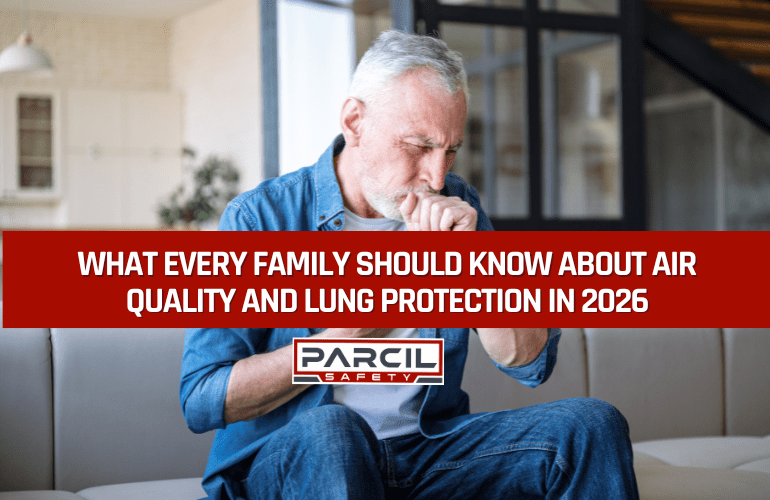
Air Quality Is Now a Family Safety Issue
Families across the United States are paying closer attention to air quality in 2026. Wildfire smoke is spreading farther than past decades. Indoor pollutants from home materials, cleaning products, and DIY projects have increased. Seasonal viruses continue to place stress on respiratory systems. Structure fires and localized chemical incidents are more common in high population regions.
The EPA reports that particulate pollution continues to affect millions of households and may rise due to longer wildfire seasons. The CDC warns that fine particles from smoke and dust can penetrate deep into the lungs and increase risks for children, older adults, and individuals with asthma.
This means lung protection is no longer an emergency-only subject. It is a household safety topic just like fire preparedness or first aid.
This guide gives families the knowledge they need to protect themselves in 2026.
Why Air Quality Matters More in 2026
Air quality problems used to be seasonal. Now they affect families year round.
The biggest contributors include:
- Wildfire smoke spreading across states
- Poor indoor ventilation
- Dust and debris during home projects
- Mold exposure during humidity spikes
- Increased structural fires
- Airborne particles from older building materials
- Chemical vapors from cleaners, paints, and fuels
These hazards do not always appear dramatic. Many are invisible. They build up slowly in the background. Strong air quality awareness protects long-term respiratory health.
Protect Your Lungs with Safety Gear Here
The Hidden Dangers Inside Homes
People often expect outdoor air to be worse than indoor air. According to the EPA, indoor air can be two to five times more polluted. Every family should be aware of the most common sources.
1. Mold and Moisture
Bathrooms, basements, and older homes can harbor mold. Microscopic spores trigger allergies and respiratory irritation.
2. Construction Dust
Renovations release fine particles from drywall, wood, and insulation.
These particles stay suspended in the air for hours.
3. Cleaning Chemicals
Solvents, bleach, and aerosol cleaners release vapors with strong lung impact, especially in small rooms.
4. Gas Appliances
Poor ventilation near stoves, heaters, or generators increases the risk of carbon monoxide and harmful fumes.
5. Old Building Materials
Older homes may include insulation, adhesives, or materials that release particles when disturbed.
Families often underestimate these indoor hazards until symptoms appear.
Outdoor Air Risks Families Should Prepare For
Outdoor air challenges in 2026 affect a wider population than ever before.
Wildfire Smoke
Large wildfire zones now impact the Midwest, South, and East Coast due to drifting smoke patterns.
Smoke exposure may cause:
- Shortness of breath
- Chest discomfort
- Headaches
- Coughing
- Eye irritation
Children and elderly family members are particularly vulnerable.
Urban Pollution
Dense traffic areas and industrial cities record higher particulate levels. Families living in these zones should take extra precautions during poor air days.
House Fires
Even small structure fires fill neighborhoods with harmful smoke and soot.
Home evacuation kits should include respiratory protection.
Protect Your Lungs with Safety Gear Here
What Families Can Do to Improve Air Safety in 2026
Families can take several simple steps to reduce risks.
Improve Home Ventilation
Use exhaust fans, open windows when safe, and confirm HVAC systems are maintained with clean filters.
Reduce Dust Accumulation
Vacuum regularly with HEPA filters and dust surfaces often.
This reduces allergen load and airborne irritants.
Use Safer Cleaning Products
Avoid heavy chemical cleaners when possible. Choose low-odor or natural options.
Monitor Air Quality Index (AQI)
Check AQI alerts through local weather apps.
Stay indoors on high particulate days.
Be Prepared for Emergencies
Create a home emergency kit with:
- Water
- First aid
- Flashlights
- Fire blanket (recommended)
- Respiratory protection
Parcil Safety fire blankets:
https://parcilsafety.com/collections/fire-safety-devices
A fire blanket is helpful in the kitchen, garage, or workshop for quick containment of flames before they spread harmful smoke.
Protect Your Lungs with Safety Gear Here
How Respirators Protect Families During Poor Air Events
A reliable respirator helps protect your lungs during:
- Wildfire smoke
- Home repairs
- Mold removal
- Chemical exposure
- Evacuation scenarios
- Workshop projects
- DIY remodeling
- Vehicle exhaust and pollution
The goal is not daily use. The goal is to be ready for the moments that matter.
What Type of Respirator Should Families Keep at Home?
1. Full Face Respirators
Best for:
- Wildfire smoke
- Home fires
- Mold remediation
- Chemical fumes
Recommended Parcil Safety Options:
-
PD-100
https://parcilsafety.com/products/pd100-full-face-respirator -
PD-101
https://parcilsafety.com/products/pd101-full-face-respirator -
ST-100X
https://parcilsafety.com/products/st100x-gas-mask-respirator
Families choose full face masks because they protect the eyes as well as the lungs.
2. Industrial Full Face Masks
Best for:
- Renovation projects
- Heavy dust
- Fine particulate exposure
Recommended Option:
-
IRM-100 Industrial Full Face Respirator
https://parcilsafety.com/products/irm-100-industrial-full-face-respirator-with-p-3-0-combination-cartridge
Its P3 filtration is ideal for home repair projects where dust and mold may be present.
3. NIOSH Approved Masks
Families often want something certified for reliability during construction or cleanup.
Recommended Parcil Options:
-
T-71 NIOSH Half Face
https://parcilsafety.com/products/t-71-niosh-half-face-respirator-with-ov-particulate-combo-cartridge-medium -
DR104 N100 Disposable
https://parcilsafety.com/products/dr104-n100-niosh-approved-disposable-mask
These are excellent for short, high particulate tasks.
Filters Families Should Keep on Hand
Every family should store replacement filters.
Strong options include:
- A2P3 R cartridges
- P3.0 combination cartridges
- Organic vapor cartridges
-
NIOSH particulate prefilters
https://parcilsafety.com/products/10-pack-500102-particulate-prefilters
Having extra filters ensures masks are ready for sudden air quality issues.
Families With Children or Elderly Members Should Be Extra Prepared
Children breathe faster and inhale more air relative to body size. The elderly have greater sensitivity to smoke and dust. Households with these groups should include:
- Air purifiers
- Strong particulate protection
- Clear evacuation plans
- Respirators stored in easy-access locations
Small preparations go a long way during unexpected events.
Air Quality Awareness Protects Families in 2026
Families are prioritizing lung protection in 2026 for good reason. Air quality challenges are more common, less predictable, and often invisible. Preparation is not alarmist. It is responsible.
The goal is to give every household a safer environment and the tools to handle emergencies confidently.
Leave a comment
All comments are moderated before being published.
This site is protected by hCaptcha and the hCaptcha Privacy Policy and Terms of Service apply.