

Welding environments expose workers to far more than sparks and heat. Welding fumes, metal particulates, grinding dust, and airborne contaminants can quickly become a long-term respiratory hazard: especially in fabrication shops, automotive work, industrial settings, and enclosed spaces.
The challenge for many welders is that traditional setups often require switching between multiple pieces of equipment throughout the day:
- a welding hood
- a grinding shield
- a respirator
- separate eye protection
Constantly removing and swapping gear slows down workflow, increases downtime, and can lead to inconsistent respiratory protection during grinding, cutting, and prep work.
That’s why more welders and metalworkers are moving toward integrated welding respirator systems that combine respiratory protection, face protection, and welding visibility into a single setup.
Why Welding Fumes Are More Dangerous Than Most People Realize

Welding fumes are created when metals are heated to extremely high temperatures, producing microscopic airborne particles and gases that can remain suspended in the air long after visible smoke disappears. Grinding, cutting, sanding, and surface preparation can also release fine particulates that are easily inhaled during long work sessions.
Depending on the materials and processes involved, welders may be exposed to:
- metal fumes
- grinding dust
- hexavalent chromium
- manganese
- zinc oxide
- airborne particulates
- chemical vapors
- gases generated during welding and cutting operations
Over time, repeated exposure to welding fumes and airborne metal particulates may contribute to respiratory irritation and other long-term health concerns, especially in enclosed or poorly ventilated workspaces.
According to OSHA, welding fumes can contain potentially hazardous substances depending on the welding material and environment:
The CDC and NIOSH also emphasize the importance of proper respiratory protection and ventilation for welders and metalworkers:
One of the biggest problems in real-world welding environments is that respiratory exposure doesn’t only happen while actively welding. Grinding welds, cutting steel, cleaning surfaces, and preparing materials can continuously generate airborne contaminants throughout the workday.
This is why many professionals are moving toward integrated respiratory protection systems that allow them to transition between welding, grinding, and fabrication work without constantly removing protective equipment.
The Problem With Traditional Welding Setups
In many fabrication shops and industrial work environments, welders constantly switch between multiple tasks throughout the day:
- welding
- grinding
- cutting
- sanding
- surface preparation
- inspections and fit-up work
The problem is that traditional protective equipment setups often require switching between multiple pieces of gear every time the task changes.
A typical workflow may involve:
- wearing a welding hood while welding
- removing the hood to grind or prep material
- switching to a separate grinding shield
- putting on a respirator for dust or fumes
- repeating the process dozens of times throughout the day
This constant equipment swapping slows down workflow, interrupts focus, and can create situations where workers briefly skip respiratory protection during “quick” grinding or prep work.
In real-world environments, many welders leave respirators off temporarily because:
- changing equipment becomes frustrating
- traditional respirators interfere with visibility
- separate shields and masks feel bulky
- fogging becomes an issue
- switching gear repeatedly wastes time
Over the course of an entire shift, those small gaps in protection can add up to significant exposure to welding fumes, grinding dust, and airborne metal particulates.
This is one reason integrated welding respirator systems are becoming increasingly popular in fabrication shops, automotive work, industrial maintenance, and metalworking environments. By combining respiratory protection, eye protection, and welding visibility into one system, welders can move between tasks faster while maintaining more consistent protection throughout the day.
Instead of constantly removing and replacing equipment, integrated systems allow workers to:
- flip down the welding hood when welding
- raise the shield while grinding or inspecting
- maintain respiratory protection throughout multiple stages of work
- reduce downtime between tasks
- simplify their overall setup
For professionals who spend long hours welding, grinding, and cutting, workflow efficiency and respiratory protection often go hand in hand.
What Makes an Integrated Welding Respirator Different?

Traditional welding setups separate respiratory protection from welding and grinding protection. Welders often wear a standard welding hood during active welding, then switch to a separate respirator or grinding shield when changing tasks.
Integrated welding respirator systems are designed to simplify that entire process by combining:
- respiratory protection
- face protection
- eye protection
- welding visibility
- grinding compatibility
into a single system.
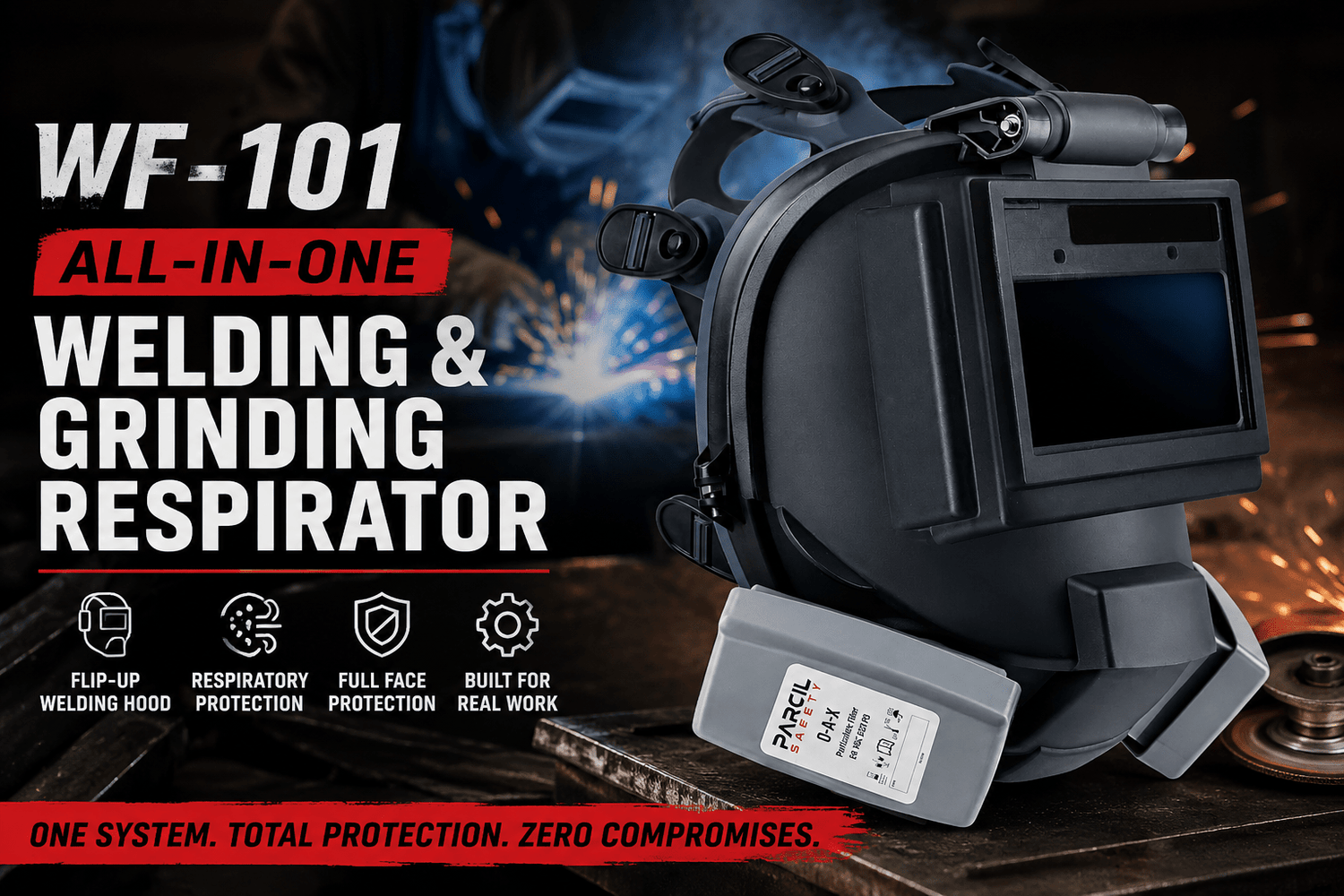
The WF-101 was designed specifically around the way real welders and metalworkers actually work throughout the day. Instead of constantly removing and swapping equipment between welding, grinding, cutting, and prep work, the integrated flip-up welding hood allows users to transition between tasks quickly while maintaining respiratory protection.
When welding, the hood flips down into place with the auto-darkening lens activated. When switching to grinding, inspections, or material preparation, the shield can be raised without removing the respirator itself.
This type of setup helps reduce:
- workflow interruptions
- downtime between tasks
- unnecessary gear changes
- inconsistent respiratory protection
while also minimizing the amount of equipment workers need to manage throughout a shift.
One of the major advantages of the WF-101 is its large 4.5 x 5.25-inch auto-darkening welding lens, which provides a significantly larger viewing area compared to many traditional welding respirators. The lens automatically adjusts to arc brightness and features adjustable DIN 5–13 shade levels for different applications.
Recommended Shade Ranges:
- DIN 5–8: Grinding, cutting, and lighter applications
- DIN 9–13: Welding applications requiring darker shade protection
The system also supports bayonet-style filters from Parcil Safety, 3M, Honeywell, and other major brands, allowing welders to use particulate or vapor protection depending on the specific work environment.
Because welding and grinding environments often involve a combination of:
- metal fumes
- airborne particulates
- smoke
- grinding dust
- vapors and gases
having a flexible full-face respirator system can help simplify respiratory protection across multiple industrial tasks.
The WF-101 also supports removable lens covers and a spectacle insert kit, allowing users who wear prescription glasses to maintain comfort and visibility without compromising the respirator seal.
Get the WF-101 Respirator Here
Real-World Welding & Grinding Applications
Welding and grinding environments can vary significantly depending on the type of work being performed, but most involve a combination of airborne particulates, fumes, sparks, and dust that require both respiratory and face protection.
The WF-101 was designed to support a wide range of industrial and fabrication tasks, including:
MIG & Stick Welding
Ideal for fabrication shops, steel work, repair jobs, and industrial welding environments where welders frequently move between welding and prep work throughout the day.
TIG Welding
Provides full-face respiratory protection while maintaining visibility and comfort during detailed welding applications.
Grinding & Surface Preparation
Grinding metal, smoothing welds, and surface prep work can generate large amounts of airborne dust and particulates. The flip-up welding hood allows users to transition quickly between welding and grinding without removing respiratory protection.
Automotive & Fabrication Shops
Useful for automotive repair, frame work, fabrication, restoration projects, and environments where workers frequently switch between cutting, grinding, and welding tasks.
Industrial & Refinery Work
Suitable for industrial maintenance, refinery environments, construction sites, and heavy-duty metalworking applications where respiratory protection and face protection are both critical.
Why Auto-Darkening Welding Lenses Matter

Traditional welding lenses require welders to manually adjust or lift their hood between tasks, which can interrupt workflow and reduce visibility during setup and positioning.
Auto-darkening welding lenses are designed to automatically adjust to arc brightness the moment welding begins, helping improve visibility, workflow efficiency, and overall comfort during long work sessions.
The WF-101 includes a large 4.5 x 5.25-inch auto-darkening lens with adjustable DIN 5–13 shade levels, allowing it to support both grinding and welding applications in one system.
The larger viewing area also provides better visibility than many standard welding respirator setups, which can help reduce head movement and improve situational awareness while working.
For welders who constantly transition between grinding, prep work, inspections, and active welding, auto-darkening systems help streamline the entire process while maintaining continuous face and respiratory protection.
Respirator Filters for Welding & Grinding
Welding and grinding environments can expose workers to a mixture of:
- welding fumes
- grinding dust
- airborne metal particulates
- smoke
- vapors and gases
Because different applications involve different airborne hazards, filter flexibility becomes extremely important in industrial environments.
The WF-101 uses a bayonet-style filter connection system compatible with filters from Parcil Safety, 3M, Honeywell, and other major brands. This allows users to configure respiratory protection based on the specific environment and exposure risks involved.
The included O-A-X particulate cartridges are designed to provide high-efficiency particulate filtration for:
- welding fumes
- grinding particles
- airborne dust
- industrial particulates
For environments involving solvents, coatings, paint vapors, or chemical exposure, users may also choose specialized vapor cartridges depending on the application.
This flexibility makes the WF-101 useful across a wide range of industrial, fabrication, automotive, and maintenance environments where respiratory hazards can change throughout the workday.
Who This Type of Respirator Is Best For

Integrated welding respirator systems are especially useful for professionals who frequently transition between welding, grinding, cutting, and prep work throughout the day.
The WF-101 is well-suited for:
- welders and fabricators
- automotive repair technicians
- metalworkers
- industrial maintenance crews
- refinery and oil & gas workers
- construction professionals
- workshop and garage users
- grinding and surface prep applications
It can be particularly useful in environments where workers want to:
- reduce equipment changes
- improve workflow efficiency
- maintain more consistent respiratory protection
- simplify their setup
- combine multiple forms of protection into one system
For users working long shifts in fabrication shops or industrial environments, reducing downtime and improving comfort can make a major difference over time.
Common Welding Respirator Mistakes
One of the most common mistakes welders make is focusing only on sparks and visible hazards while underestimating long-term respiratory exposure.
Here are several common welding respirator mistakes seen in real-world work environments:
Removing Respiratory Protection During Grinding
Many workers wear protection while actively welding but remove respirators during grinding or prep work, even though grinding can generate large amounts of airborne dust and metal particulates.
Using Basic Dust Masks for Welding Fumes
Standard dust masks may not provide adequate protection against welding fumes, fine particulates, or certain airborne contaminants commonly generated during fabrication work.
Ignoring Ventilation Conditions
Poor ventilation can significantly increase airborne fume concentrations, especially in enclosed garages, fabrication shops, tanks, and industrial environments.
Using Multiple Separate Systems
Constantly switching between welding hoods, grinding shields, and respirators often leads to inconsistent protection and workflow interruptions throughout the day.
Neglecting Filter Maintenance
Respirator filters should be replaced regularly depending on usage, environment, and exposure levels. Dirty or overloaded filters can increase breathing resistance and reduce overall comfort.
Using a properly fitted respirator system consistently throughout welding, grinding, and cutting tasks can help improve both protection and long-term usability in demanding work environments.
Modern welding and fabrication environments require more than just basic face protection. Between welding fumes, grinding dust, airborne particulates, and long work hours, respiratory protection has become an increasingly important part of industrial safety.
The WF-101 was designed around the realities of modern welding workflows by combining:
- respiratory protection
- welding visibility
- grinding protection
- full-face coverage
into one integrated system.
Instead of constantly switching between separate welding hoods, grinding shields, and respirators, users can move between tasks more efficiently while maintaining consistent protection throughout the workday.
For welders, fabricators, automotive professionals, and industrial workers looking to simplify their setup while improving respiratory safety, integrated welding respirator systems offer a practical all-in-one solution for demanding environments.
Leave a comment
All comments are moderated before being published.
This site is protected by hCaptcha and the hCaptcha Privacy Policy and Terms of Service apply.