

Most people think respiratory protection only matters during obvious disasters. Fires. Chemical accidents. Large-scale emergencies.
That thinking is outdated.
As we move into 2026, the most dangerous respiratory threats are often quiet, invisible, and underestimated. They do not arrive with sirens. They build slowly, spread widely, and affect everyday environments.
Here are the respiratory threats that experts, industrial hygienists, and preparedness-minded civilians are paying closer attention to heading into 2026.
Get Respiratory Safety Essentials Here
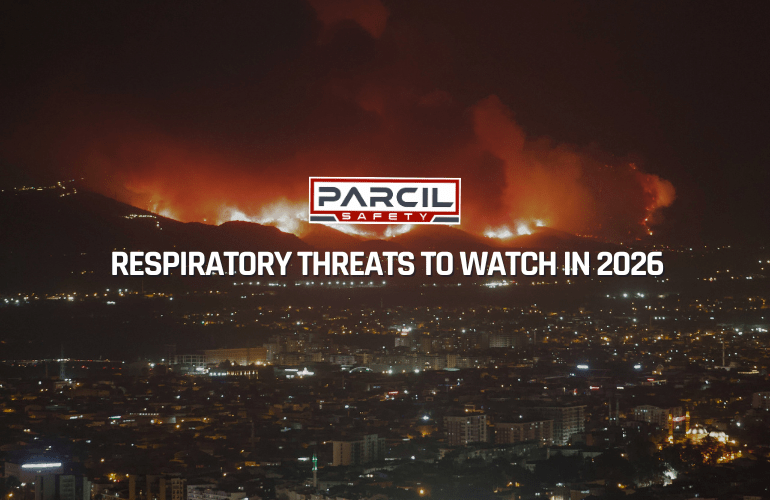
Wildfire Smoke That Travels Hundreds of Miles

Wildfire smoke is no longer a regional problem.
According to the National Interagency Fire Center, smoke from major fires now regularly travels across multiple states, impacting air quality far from the burn zone. Fine particulate matter known as PM2.5 penetrates deep into the lungs and bloodstream.
The Harvard T.H. Chan School of Public Health has linked repeated smoke exposure to increased cardiovascular stress and long-term lung inflammation, even in healthy adults.
Many people underestimate how often they are exposed simply by:
- Commuting
- Exercising outdoors
- Opening windows during smoke advisories
Disposable masks offer limited protection against fine particulates over extended periods. Full face respirators with appropriate filters provide consistent protection during prolonged exposure.
Urban Air Pollution and Construction Particulates

Urban air quality continues to worsen in many metro areas.
The World Health Organization reports that particulate pollution from construction, traffic, and industrial activity is increasing in density and frequency, particularly near residential zones.
Key overlooked risks include:
- Silica dust from concrete and masonry work
- Diesel exhaust particulates
- Heavy metals released during demolition
These particles are often invisible and easily inhaled. Over time, exposure contributes to chronic respiratory irritation and reduced lung function.
This is why industrial-grade respirators are increasingly used outside traditional job sites.
Indoor Air Contaminants Inside Homes and Apartments

Most people assume home air is safer than outdoor air.
In reality, the American Lung Association notes that indoor air can be two to five times more polluted due to:
- Mold spores
- VOCs from cleaning products
- Off-gassing from furniture and flooring
- Poor ventilation during extreme weather
Mold remediation professionals frequently use full face respirators during inspections and cleanups because spores and mycotoxins irritate both lungs and eyes.
Prepared civilians are beginning to take similar precautions during:
- Basement floods
- Renovations
- Long-term humidity issues
Chemical Spills and Transportation Accidents

Rail and highway transport of industrial chemicals continues to increase.
The U.S. Department of Transportation Pipeline and Hazardous Materials Safety Administration documents thousands of hazardous material incidents each year, many occurring near residential areas.
Common exposures include:
- Chlorine
- Ammonia
- Industrial solvents
These incidents rarely allow time to prepare. Having respiratory protection accessible matters more than having it stored away.
Civil Unrest and Crowd Control Agents

Civil unrest events often involve smoke, irritants, and chemical agents intended to disperse crowds.
Organizations such as the National Institute of Justice acknowledge that tear gas and similar agents affect respiratory systems, eyes, and skin even among bystanders.
Protection during these events is not about confrontation. It is about maintaining visibility, breathing capability, and safe movement.
Why Full Face Respiratory Protection Is Gaining Attention
Half masks protect the lungs only.
Full face respirators protect:
- Lungs
- Eyes
- Mucous membranes
- Facial skin
According to research published by the Journal of Occupational and Environmental Hygiene, eye exposure significantly increases disorientation during smoke and chemical incidents.
This explains why professionals and prepared civilians are shifting toward full face solutions.
Parcil Safety Respiratory Solutions for 2026
Parcil Safety offers respiratory protection designed for real-world exposure scenarios:
- ST-100X Gas Mask Respirator for smoke and particulate exposure
- PD-100 and PD-101 Full Face Respirators for indoor air hazards
- NB-100 Tactical Gas Mask for urban and emergency scenarios
Each supports standardized filter systems so protection can adapt to different threats.
Explore Parcil Safety respiratory protection here:
https://parcilsafety.com/collections/respirators
Respiratory threats in 2026 are not limited to extreme scenarios.
They exist in everyday environments. They accumulate quietly. And they affect long-term health.
Preparedness today means recognizing what most people overlook.
Leave a comment
All comments are moderated before being published.
This site is protected by hCaptcha and the hCaptcha Privacy Policy and Terms of Service apply.